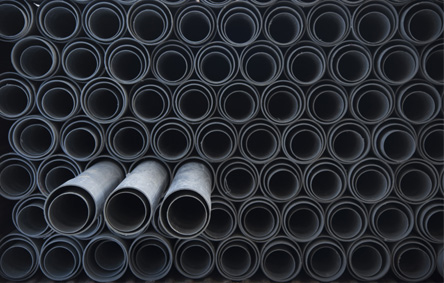
PVC is one of the most widely used plastics in the world, with global production crossing 50 million tons each year. It is used to make pipes, window profiles, cable insulation, and many construction products. Yet PVC has one serious limitation it cannot handle high heat on its own. During manufacturing processes like extrusion or molding, temperatures often reach 160–200°C, and at this point PVC can start to break down quickly. That is why every formulation requires a pvc stabilizer. Without it, producing reliable PVC products would be extremely difficult.
Why PVC Is Naturally Unstable During Processing
To understand why a pvc stabilizer is necessary, it helps to look at the structure of PVC itself. PVC is made of long chains of vinyl chloride units, and each unit contains a chlorine atom attached to the carbon backbone. This chlorine content gives PVC many useful properties, but it also creates a weak point in the polymer structure.
The bond between carbon and chlorine (C–Cl) is sensitive to heat. When PVC is exposed to the high temperatures used during processing, some of these bonds begin to break. Once this happens, hydrogen chloride (HCl) gas is released from the polymer chain. The release of HCl does not stop there it actually speeds up further breakdown of nearby chains. In other words, the degradation begins to feed on itself.
As the reaction continues, the material can lose color, strength, and stability. This is why manufacturers rely on a pvc stabilizer manufacturer to provide systems that control this reaction and keep the polymer structure stable during processing.
What Actually Happens When PVC Degrades in Manufacturing
In a real production line, PVC degradation becomes visible very quickly. During extrusion, injection molding, or compounding, the material is exposed to high temperature and shear inside machines such as twin-screw extruders or mixers. If the formulation does not contain an effective pvc stabilizer, the first sign processors usually notice is yellowing of the material. As the temperature exposure continues, the color can shift to brown.
Another common sign is a sharp, acidic burning smell, which indicates the release of hydrogen chloride (HCl). Once this gas forms, it accelerates further breakdown inside the melt. Processors may also start seeing black specks or burnt particles in the output. At this stage, the polymer chains are already damaged.
The final product also suffers. Pipes or profiles may show reduced strength and increased brittleness, making them more likely to crack during use. This is why manufacturers rely on formulations developed by experienced pvc additives manufacturer partners to maintain stable processing.
What Does a PVC Stabilizer Actually Do?
At its core, a pvc stabilizer is added to PVC formulations to control the chemical reactions that occur when the material is exposed to heat during processing. Without stabilization, these reactions would quickly damage the polymer and make consistent manufacturing almost impossible.
One of the most important jobs of a stabilizer is neutralizing hydrogen chloride (HCl) as soon as it begins to form. By capturing or reacting with this acidic gas, the stabilizer prevents it from triggering further breakdown inside the polymer melt.
Stabilizers also help protect the polymer chains themselves. When heat starts affecting the PVC structure, stabilizer systems act as a protective buffer that slows down chain damage and keeps the material usable during processing.
Another important role is maintaining processing stability. During extrusion or molding, PVC must remain stable long enough to pass through machines, shaping tools, and cooling stages. A properly designed stabilizer system allows manufacturers to maintain steady production without frequent discoloration or material burn.
Key Mechanisms That Allow PVC Stabilizers to Work
A good pvc stabilizer does more than just “handle heat.” Inside the processing equipment, several chemical reactions start taking place as the material is heated and mixed. Stabilizers are designed to control these reactions so the PVC remains usable while it is being shaped into a product.
HCl Neutralization
When PVC begins to degrade, it releases hydrogen chloride gas. If this gas remains in the melt, it quickly accelerates further breakdown of the material. Stabilizers react with this acid and neutralize it, which helps stop the reaction from spreading through the batch.
Replacement of Weak Chlorine Sites
Certain positions in the PVC chain are more sensitive to heat. Some stabilizer systems interact with these weak spots and replace them with more stable groups. This reduces the chance of early degradation during processing.
Polymer Structure Protection
Heat and mechanical stress inside an extruder can damage the long PVC chains. Stabilizers help protect this structure so the material keeps its strength while it moves through the machine.
Radical Control
During heating, highly reactive fragments can form inside the polymer. Stabilizers limit these reactions and prevent them from damaging the material further.
Color Stability
Another role of stabilizers is maintaining appearance. When degradation begins, PVC can quickly turn yellow or brown. Stabilization slows these reactions so processors can maintain consistent color in the final product.
Why PVC Cannot Be Manufactured Without Stabilizers
In real factory conditions, processing PVC without stabilizers is simply not practical. When PVC resin enters an extruder or molding machine, it is exposed to both high temperature and mechanical stress. Without stabilization, the material begins to deteriorate almost immediately inside the barrel.
Processors often notice the first warning signs during the run itself. The melt may start showing yellow streaks, and in a short time the color can darken. Operators may also notice a sharp acidic smell, which is a signal that the material is breaking down inside the machine. If the process continues, burnt particles and black specks can appear in the finished output.
The problem does not stop at appearance. Products made from unstable material usually show lower strength and poor durability. Pipes may crack more easily, and profiles can become brittle over time.
For this reason, stabilizers are considered a basic part of any PVC formulation. Without them, maintaining stable production and reliable product quality would be extremely difficult.
How Stabilizers Improve the Final Performance of PVC Products
To understand the real value of stabilizers, it helps to look beyond the factory floor and think about how PVC products behave after installation. Stabilizers improve the final performance of PVC products by helping the material keep its strength, color, and structure over long periods of use. In other words, they help the product stay reliable years after it has been manufactured.
Consider PVC pipes used in water supply or drainage systems. These pipes are expected to remain underground for decades. When the material is properly stabilized, it resists long-term heat exposure and chemical changes that could otherwise weaken the pipe wall.
The same idea applies to window and door profiles. These components face constant sunlight and changing weather. Good stabilization helps the surface maintain its color and prevents the material from becoming brittle over time.
Another example is PVC cable insulation. Electrical cables must remain flexible and safe even when temperatures fluctuate. Stabilization helps the insulation hold its shape and mechanical strength during years of service.
Simply put, stabilizers help PVC products maintain their performance long after manufacturing is complete.
Why Stabilizer Selection Matters in PVC Manufacturing
Stabilizer selection matters in PVC manufacturing because each PVC product faces different processing conditions and service environments. A formulation that works well for one product may not perform the same way for another.
Take PVC pipes and window profiles as an example. Pipes often run through high-output extrusion lines where the material stays under heat for a longer period. Profiles, on the other hand, must maintain a consistent surface finish and color because they are visible building components. These differences influence the type and balance of stabilizers used in the formulation.
Product thickness also plays a role. Thicker sections remain hot for longer during shaping and cooling, which increases the chance of degradation if the stabilization is not adequate. In outdoor products, sunlight and changing weather conditions add another challenge.
Because of these practical factors, stabilizer choice is usually based on processing trials and field experience.